
Federal Employment
Understanding Federal Employment
Federal Employment | Federal Government Careers
There are three branches of the federal government: legislative, executive and judicial. The executive branch includes fifteen cabinet departments with over 63 independent agencies. These departments and agencies have offices in all corners of the world. Larger agencies hire a broad spectrum of occupations, professional and blue collar.
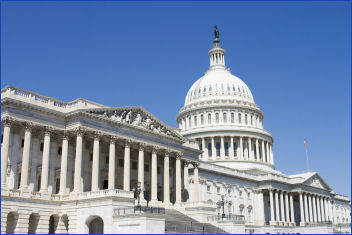
If you desire to travel, government careers offer abundant opportunities to relocate within the fifty states and throughout the world. There are thousands of overseas employment opportunities. Twelve federal agencies and departments provide employment abroad for over 45,000 workers. The federal civil service recruited 343,500 new hires in fiscal years 2020 and 2021.
The Washington DC, Maryland, and Virginia metropolitan area has the largest number of federal workers, 282,666, and Delaware the least with 3,039 workers. All of the 315 Metropolitan Statistical Areas (MSAs) in the U.S. and Puerto Rico have federal civilian employees. Small towns and rural areas outside of MSAs employ 18 percent of total non-Postal federal workers. The actual number of federal civilian employees is greater than the above figures. The Defense Intelligence Agency, Central Intelligence Agency, and the National Security Agency do not release this data.
This site provides federal job listings in your area, nationally, and overseas. Special hiring programs for the disabled, veterans, and students are described in detail. Consolidated government job listings are provided, and we link you to over 140 federal agency recruiting sites. Use these resources to land a high paying government job. If you are considering federal employment use the links below to find great opportunities.

Introduction Menu
- Overview
- Working Conditions
- Determining Your Eligibility
- Federal Job Outlook
- Where the Jobs Are Located
- Federal employment by state
- What Jobs Are Available?
- Education Requirements
- Complete a Self Assessment – Finding the right occupation
- Medical Qualifications and Drug Testing Requirements
- The Six Keys to Finding a Federal Job
- Pay and Benefits
- Federal Student Loan Repayment Program – For new hires and federal employees
 2024 Pay Scale (GS)
 How to Negotiate a Higher Starting Salary
- Federal Occupations – Categories and Job Series
- Government Job Vacancies
Overview
Tremendous government job opportunities are available for those who know how to tap this lucrative job market. All government hiring is based on performance and qualifications regardless of your sex, race, color, creed, religion, disability, or national origin. Where else can you apply for a high paying entry-level job that offers employment at thousands of locations internationally, excellent career advancement opportunities, plus careers in hundreds of occupations?
Consider the numbers. Uncle Sam employs 2,0978,881 federal employees plus 653,167 postal workers, for a total of 2,751,048 and hires hundreds of thousands of new employees each year to replace workers that transfer to other federal employment areas, retire, or stop working for other reasons. Average annual salary of all full-time employees exceeds $90,000. The U.S Government is the largest employer in the United States, hiring 2 percent of the nation’s civilian work force. Our Job Hunter’s Checklist guides you step-by-step through the hiring process.
Assessment tools are available to help you identify occupations and jobs that fit your knowledge, skills, abilities (KSAs), and personality. If you aren’t 100% sure of what occupation is best suited to your education, experience and background take one of the personal assessments available on our Federal Employee’s Career Development Center. Simply visit the site, review the assessment process and download the free assessment forms to get started.
The federal government affects the lives of Americans everywhere. It defends Americans from foreign aggressors, represents American interests abroad, provides important public services, creates and enforces laws, and administers social programs. Americans are often unaware of government’s influence when they watch a daily weather forecast, purchase fresh and uncontaminated groceries, travel on highways or by aircraft, or make a deposit in a bank. Workers employed by the Federal Government play a vital role in these and many other facets of American life. Federal careers are truly for those seeking to make a difference in our country
The Constitution of the United States divides the Federal Government into the legislative, judicial, and executive branches. The executive is by far the largest of the branches, but each is equally vital in running the country.
Working Conditions
Almost every working condition found in the private sector can also be found in the federal government. Most white-collar employees work in office buildings, hospitals, or laboratories, while blue-collar employees generally work in factories, warehouses, shipyards, air bases, or construction sites. Others spend much of their time outdoors, such as those employed in national parks and forests. Work environments can range from very controlled and relatively relaxed environments, while other environments are quite hazardous and stressful – such as those of law enforcement officers, astronauts, or air traffic controllers.
Many federal workers’ duties require travel away from their duty station to attend meetings, complete training, or perform inspections while others – such as auditors, instructors, field engineering crews, and safety investigators – may require extensive travel for weeks or months at a time. Some employees are on continuous travel and receive lump sum payments to cover travel costs. Alternative work schedules are available to many workers through negotiated union contracts that permit flextime or compressed work schedules. Some agencies are experimenting with flexiplace or telecommuting which allow workers to perform some job duties at home and many larger federal workplaces now offer childcare facilities for parents who chose a government career.
Over sixty percent of all agencies recently surveyed have some form of Quality of Work Life (QWL) or Employee Involvement (EI) program implemented throughout their workforce. These programs encourage employee participation at all levels to improve overall efficiency, productivity, and working conditions.
Determining Your Eligibility
Eligibility is determined through the evaluation of an applicant’s related education AND/OR work experience. For example, an entry level radio operator working in Houston, Texas would start at a GS-2 pay grade, step 1 at $26,017 per year, if he or she was a high school graduate OR had at least three months of general experience. That same radio operator could start at a GS-4, $32,017 per year, if he or she had six months of general experience and six months of specialized experience, OR two years of education above high school with courses related to the occupation you would start at the GS-5 grade at $35,822 per year. Depending on the where you live the salary would vary based on the “Locality Pay” rates offered in your area.
College degree requirements, in many cases, can be substituted for work experience. Refer to the Job Qualification Standard for Administrative and Management Positions. Applicants for jobs in this group can substitute three years of general experience for a four year bachelor’s degree. Many job hunters without degrees see Bachelor’s Degree listed as required in the job announcement, stop reading and look elsewhere. If they had read the entire job announcement they would have realized that work experience could be substituted for this degree requirement. Many highly qualified applicants miss out on lucrative jobs because of this one fact.
General Experience
This is any type of work which demonstrates the applicant’s ability to perform the work of the position, or any experience which provides a familiarity with the subject matter or process of the broad subject areas of the occupation. Specialized experience can be substituted for general experience.
Specialized Experience
This is experience which is in the occupation of the position to be filled, in a related occupation, or in one of the specialized areas within that occupation, which has equipped the applicant with the particular knowledge, skills, abilities, and other characteristics (KSAOs) to perform the duties of the position.
Written Tests
It should be noted that if a written test is required, many agencies allow applicants to bypass the written test for select occupations by completing an “Occupational Questionnaire.” This is a series of questions, often 30 to 75 or more, that you have to answer in detail, often online. Occupational questionnaires are not KSAs. Many applicants confuse them for KSA statements. If KSAs are required, the job announcement will identify them as such. See Chapter Six for additional guidance in this area.
Applicants must complete a federal style résumé in most cases. Read the job announcement to determine the required format.
Most agencies accept applications online. It is best to compile your federal style resume off line and then copy and paste it into the online application. OPM or the hiring agency then evaluates the applicants’ responses to determine the most highly qualified candidates. Hiring offices receive a list of the qualified applicants from either OPM or the agency’s human resource department for each vacancy. Agencies may require qualified applicants to take a written test for specific occupations.
The federal government evaluates each candidate on his/her ability to perform the duties of the position. Ability is obtained through education AND/OR experience.
Read more about the examination process…
Return to introduction menu
Go to federal Job Outlook
Go to Education Requirements